

Private Wells and Water Shares in the Santa Cruz Mountains: What Buyers Need to Know
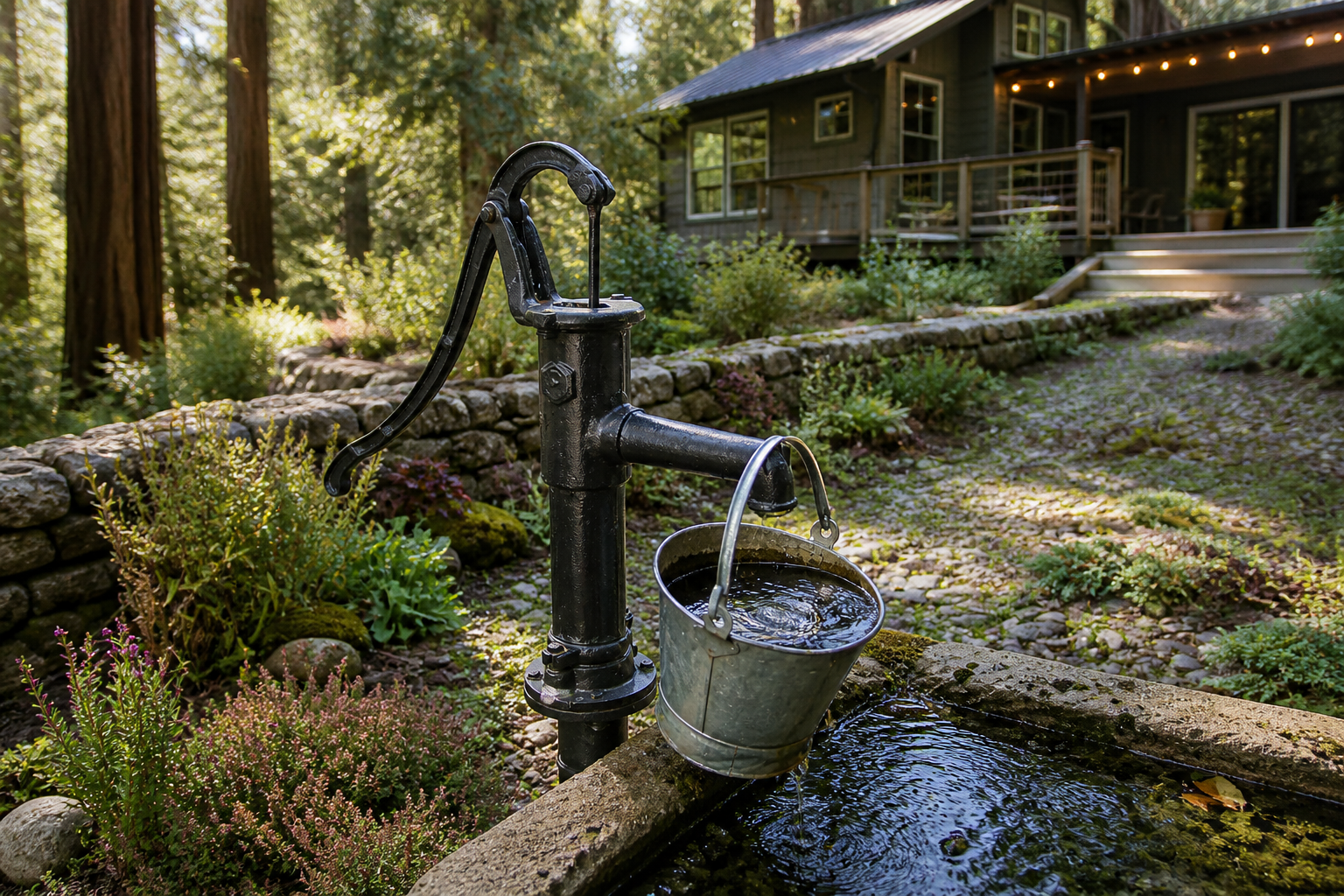
One of the first things I tell buyers who are new to mountain real estate is this: water is a topic here. Not in a scary way, but in a real way that deserves actual attention before you buy.
Most homes in Felton, Ben Lomond, Boulder Creek, and Lompico are not connected to a municipal water system. They get their water from a private well, a spring, a water share, or a small mutual water company like the kind I help manage through Forest Lakes. Each situation is a little different, and understanding yours before you close is genuinely important.
What Is a Private Well?
A private well draws water directly from the groundwater beneath the property. The homeowner is responsible for maintaining the well equipment and monitoring water quality. Unlike city water, private wells are not regulated or tested by a public utility. That responsibility falls on the property owner.
Wells can be excellent sources of clean, reliable water. They can also have limitations, particularly around yield, which is the rate at which the well produces water, and quality, which can be affected by nearby agricultural runoff, septic systems, or naturally occurring minerals.
What Is a Water Share?
Some mountain properties hold a share in a small mutual water company. This means you own a proportional interest in a shared water source and distribution system, and pay dues to the water company for maintenance and operations. The quality and reliability of your water is managed collectively.
Lompico is a good example of this. Knowing who runs the water company, how financially sound it is, and what the historical reliability has been matters before you buy a property that depends on it.
New County Requirements at Time of Sale
Santa Cruz County updated its rules for Individual Water Systems in 2025. If you are buying a home served by a private well, spring, or stream diversion, the seller is now required to complete both water quality testing and a yield test before the sale can close.
The testing process takes time, often three to five weeks from start to final results. This means sellers need to start early, and buyers need to know what they are reviewing when the results come in. A good inspector or your agent should help you understand what the numbers mean.
The testing does not require the seller to treat the water if it comes back with issues. But it does require disclosure, and buyers can use the results to negotiate or decide whether to proceed.
Questions to Ask About Any Mountain Property
Before making an offer on a home with a private water source, it is worth asking: How old is the well? When was the pump last serviced? What is the average yield? Has the water been tested recently and for what contaminants? Is the property on a water share, and if so, what are the dues and what is the company's history?
These are not trick questions. Most sellers have answers. A seller who does not know anything about their water situation is a flag worth paying attention to.
How This Affects Your Financing
Some lenders have specific requirements around well water for certain loan types. If you are using FHA or VA financing, for example, water quality may need to meet certain standards before the loan is approved. It is worth asking your lender early in the process so you know what hurdles might be ahead.
Buying a home with well water or a water share is common in the mountains, and it works well for a lot of people. The key is going in with eyes open. That is what I try to help every buyer do.