Where to Live in the Santa Cruz Mountains If You're Moving From Out of State
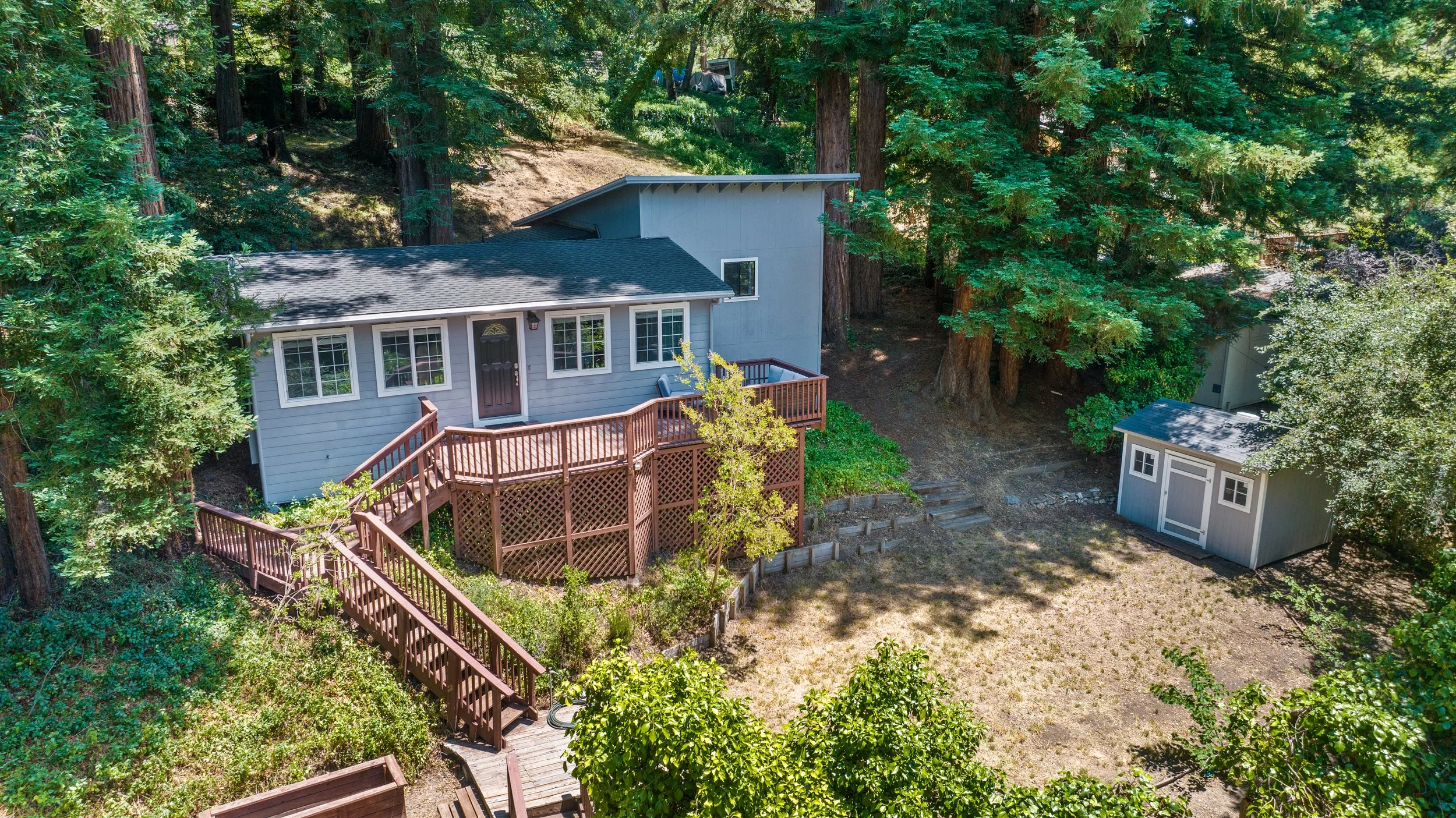
I work with a lot of relocation buyers, and honestly, they're some of my favorite people to help. There's something I really enjoy about the process of translating a life that's already working somewhere else into what it could look like here in the mountains.
We always start in the same place: tell me about where you're coming from. What do you love about your neighborhood? What drives you nuts? What does a regular Tuesday look like, and does that need to stay the same, or is that part of what you're trying to change?
Because here's the thing. The "best" community for someone leaving a dense urban neighborhood in Seattle is completely different from the right fit for someone leaving a suburb of Dallas. The mountains aren't one thing. They're a collection of very distinct places with different personalities, different trade-offs, and different kinds of buyers who tend to land there and stay.
So if you're moving from out of state, here's how I'd think about it.
Match Your Neighborhood Type to the Santa Cruz Mountains
Most of the relocation buyers I work with fall somewhere in one of these three categories.
If You're Coming From an Urban or Walkable Area
You're used to leaving your car parked for days. Coffee on foot. Restaurants within a few blocks. The feeling of being in a neighborhood that has actual energy to it.
The honest answer is that the mountains won't fully replicate that, and I'd rather tell you that upfront than let you figure it out after close of escrow. What the mountains do offer is something different: quiet, space, and a slower pace that a lot of former city people find they actually wanted once they have it.
If walkability still matters to you, Felton tends to have the most going on in terms of small town infrastructure. There's a downtown, a few places to eat, access to Henry Cowell Redwoods, and you're close enough to Santa Cruz that you can get to a farmers market or a hardware store without planning your whole day around it.
Price range:
Entry level: ~$500K – $700K
(usually smaller cabins, older homes, or homes needing work)
Mid-range (most common): ~$700K – $1.0M
(this is the bulk of the market right now)
Higher-end: ~$1.0M – $1.5M+
(updated homes, better access, more sun, larger lots)
If You're Coming From an Established Suburb
Tree-lined streets. Good schools. Neighbors who've been there for decades. A yard with room for the dog. The kind of place where things are predictable in a good way.
That version of the mountains exists. Ben Lomond and Scotts Valley both have that feel in different ways. Scotts Valley runs more suburban with stronger school options and an easier commute to Silicon Valley if that matters to you. Ben Lomond has more of a local, long-time-resident feel and a quieter pace.
What's different here versus a typical suburb: infrastructure is less uniform. Some neighborhoods are on private wells and septic. Roads vary. You might love your house and find that the commute takes some adjustment. These are manageable things, but they're worth understanding before you make an offer.
Price range:
Entry level: ~$600K – $800K
(fixers, smaller homes, tighter lots, less sun)
Mid-range (most common): ~$800K – $1.1M
(this is where most of your buyers will land)
Higher-end: ~$1.1M – $1.4M+
(updated, good access, usable land, more light)
If You're Coming From a Newer Development or Planned Community
You liked things being new. Modern floor plans. Low maintenance. An HOA that handled the exterior stuff so you didn't have to think about it.
The mountains are mostly the opposite of that. Properties here tend to be older, more individual, sometimes quirky. Maintenance is more hands-on. There's no HOA managing your landscaping.
What buyers in this category tend to discover is that they actually like the trade. The individuality of mountain properties, the land, the trees, the sense that your house is yours in a way that new construction in a planned community never quite feels. But it's a real shift, and it's worth being honest with yourself about whether you're ready for it.
If you want newer construction and a more conventional feel, Scotts Valley is your best bet in my service area.
Price range:
Entry level: ~$800K – $1.0M
(condos, townhomes, smaller or older homes)
Mid-range (most common): ~$1.0M – $1.5M
(this is where most buyers land)
Higher-end: ~$1.5M – $2.5M+
(larger homes, updated, better neighborhoods)
What Every Relocation Buyer Should Know About the Santa Cruz Mountains
No matter where you're coming from, there are a few things I tell every out-of-state buyer before we get too far into the process.
Mountain real estate has its own set of considerations that don't come up in most markets. Private wells and water shares are common. Septic systems are the norm, not the exception. Fire risk is a real conversation in many parts of the mountains, especially as you get further up toward Boulder Creek. Some properties have shared driveways or access road easements that affect both daily life and financing.
None of these things should scare you off. But they should be things you understand before you fall in love with a property, not after.
I'd also say this: your first neighborhood here doesn't have to be your forever neighborhood. If you're genuinely uncertain about where you want to land, renting for a year is a reasonable thing to do. Get a sense of the commute, the seasons, the community. The mountains reveal themselves slowly, and that's part of the point.
How I Work With Relocation Buyers
Here's what the process typically looks like with me.
We start with a conversation. Not a form, not a checklist. I want to understand what you loved about where you're leaving and what you're hoping to find here. The more specific you are, the better I can point you in the right direction.
From there, I'll put together a picture of what the market looks like for your situation: price ranges, what's actually available, what buyers from similar backgrounds have typically found once they get here.
Before you visit, I'll send you a sense of the communities that fit what you're describing, so when you do come out, we're spending your time in the right places rather than driving through areas that were never going to work.
And when it comes to timing, I'll give you my honest read. Should you rent first? Is now a good time to buy? Are you looking at a market where you can afford to wait, or one where you'd regret it? I'd rather have that conversation early than have you feel like you made the wrong call later.
A Few Questions I Hear Often
Should I rent or buy when I first move to the mountains?
It depends on how well you know what you want. If you have a clear picture, buying makes sense. If you're still figuring out whether mountain life is actually for you, or which community fits, renting for six to twelve months is a reasonable hedge. I can help you think through which way makes more sense for your situation.
I don't know anyone here. Which areas are easier for meeting people?
Downtown areas and smaller communities with gathering spots, coffee shops, local businesses, a farmers market, tend to be easier for organic connection. Lompico and Ben Lomond both have a tight-knit community feel. More isolated properties can be beautiful but quieter in every sense of the word.
What if I can't afford the mountain version of what I had?
This comes up more than people expect. The mountains are not cheap, and what your budget gets you here might be different from what you're used to. Usually the trade-offs are around size, condition, or location relative to commute corridors. I'll always be straight with you about what's realistic so you're not chasing a version of this that doesn't exist at your price point.
What to Do Next
If you're moving from out of state and want to talk through what the Santa Cruz Mountains might look like for you, reach out. I'm happy to start with a conversation before anything else.
Click here to book a quick 10–15 minute goals call — we’ll map out what a smart path forward looks like for you. Zero pressure, always free.
Follow along on Instagram for a real sense of mountain life: @heysarahwagner and @santacruzmountainliving
Download mySanta Cruz Mountains Relocation Guidefor a closer look at each community, what to expect from the buying process here, and the questions most out-of-state buyers wish they had asked sooner.