

Buying a Home on a Well or Septic System in the Santa Cruz Mountains
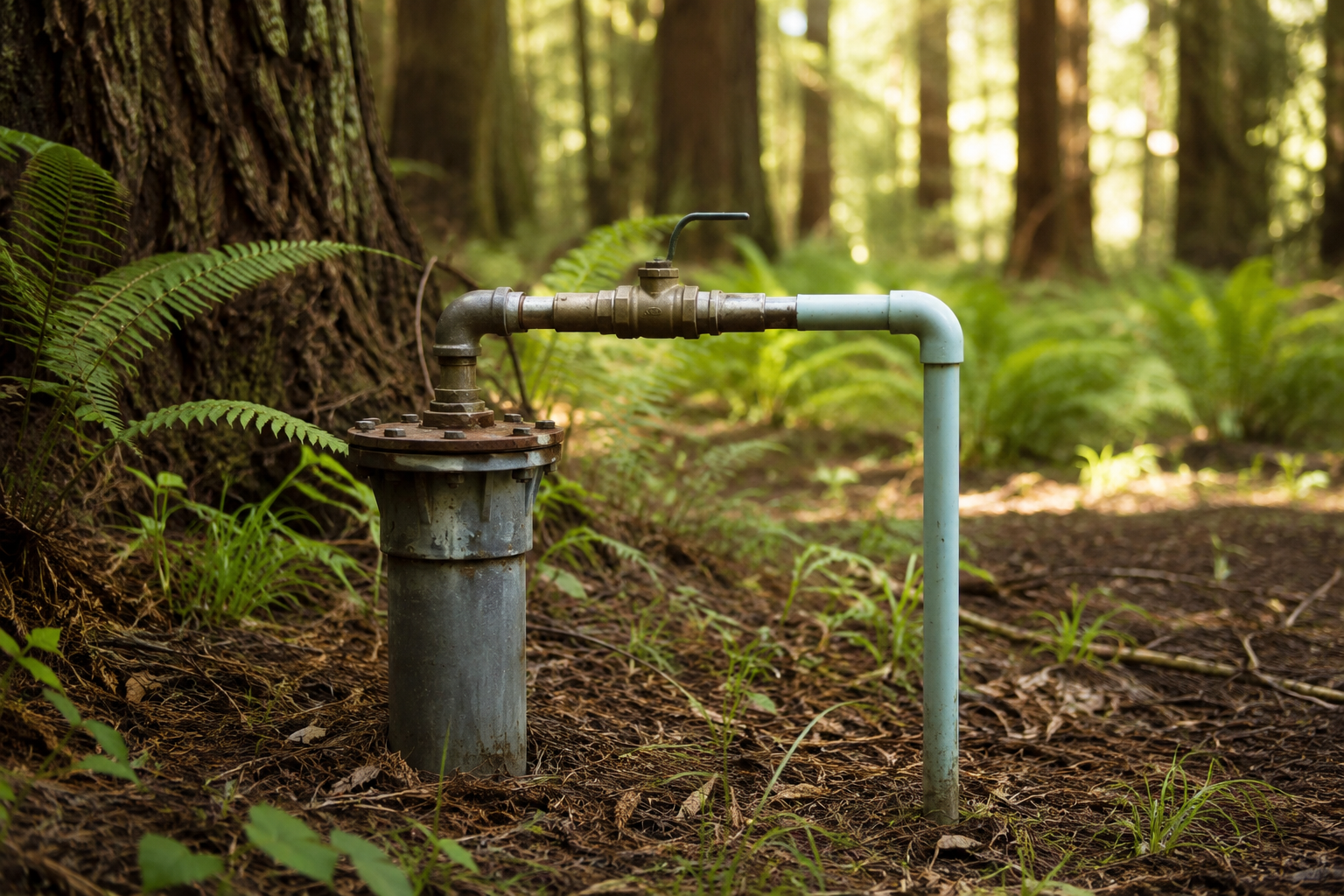
City buyers moving into the Santa Cruz Mountains often discover that two systems they have never thought about — the well and the septic — suddenly become some of the most important features of their new home. The good news: thousands of mountain homeowners live happily with both. The key is knowing what to check before you buy.
Understanding wells
A large share of mountain homes draw their water from a private well rather than a municipal supply. That means the homeowner is responsible for the water — its quantity, its quality, and the equipment that delivers it.
What to evaluate
Productivity: how many gallons per minute does the well reliably produce, especially in late summer?
Water quality: test for bacteria, nitrates, minerals, and anything else relevant to the area.
Depth: deeper wells generally cost more to service and to pump from.
Equipment age: pumps, pressure tanks, and storage tanks all have finite lifespans.
Any construction, reconstruction, or destruction of a well in the county requires a Santa Cruz County Environmental Health permit, so ask for documentation on the well's history.
Understanding septic systems
The vast majority of homes in the hills are on septic rather than sewer. A septic system is reliable when maintained — tanks should generally be inspected every three years and pumped every three to five years, depending on use.
The county inspection requirement
This is important for both buyers and sellers: as of July 1, 2023, Santa Cruz County requires a septic system inspection and pumping report for any real estate sale involving an onsite wastewater treatment system. This applies to homes with septic tanks in both unincorporated and incorporated areas of the county. In practice, that means the septic gets looked at as part of the transaction — use that report carefully.
Budgeting realistically
Wells and septic systems are not reasons to avoid mountain homes — they are simply line items to plan for. Build a small reserve for routine well servicing and septic pumping, and get a clear-eyed inspection so you know whether any major components are near the end of their life. A failing leach field or an aging well pump is far better discovered during escrow than a year after closing.
Questions to ask the seller
When was the well last serviced, and what is its tested production rate?
Do you have recent water-quality test results?
When was the septic last inspected and pumped, and is the county report available?
Has the leach field ever shown signs of failure or been replaced?
Are there permits and as-built diagrams for both systems?
The bottom line
Wells and septic systems are part of the rhythm of mountain living — and once you understand them, they are completely manageable. The buyers who feel blindsided are the ones who skipped the homework; the buyers who feel confident are the ones who tested, inspected, and asked questions. If you are looking at a mountain home and want a checklist tailored to that specific property, reach out.