

Homeowners Insurance 101: What to Check Before Fire Season Turns Into Storm Season
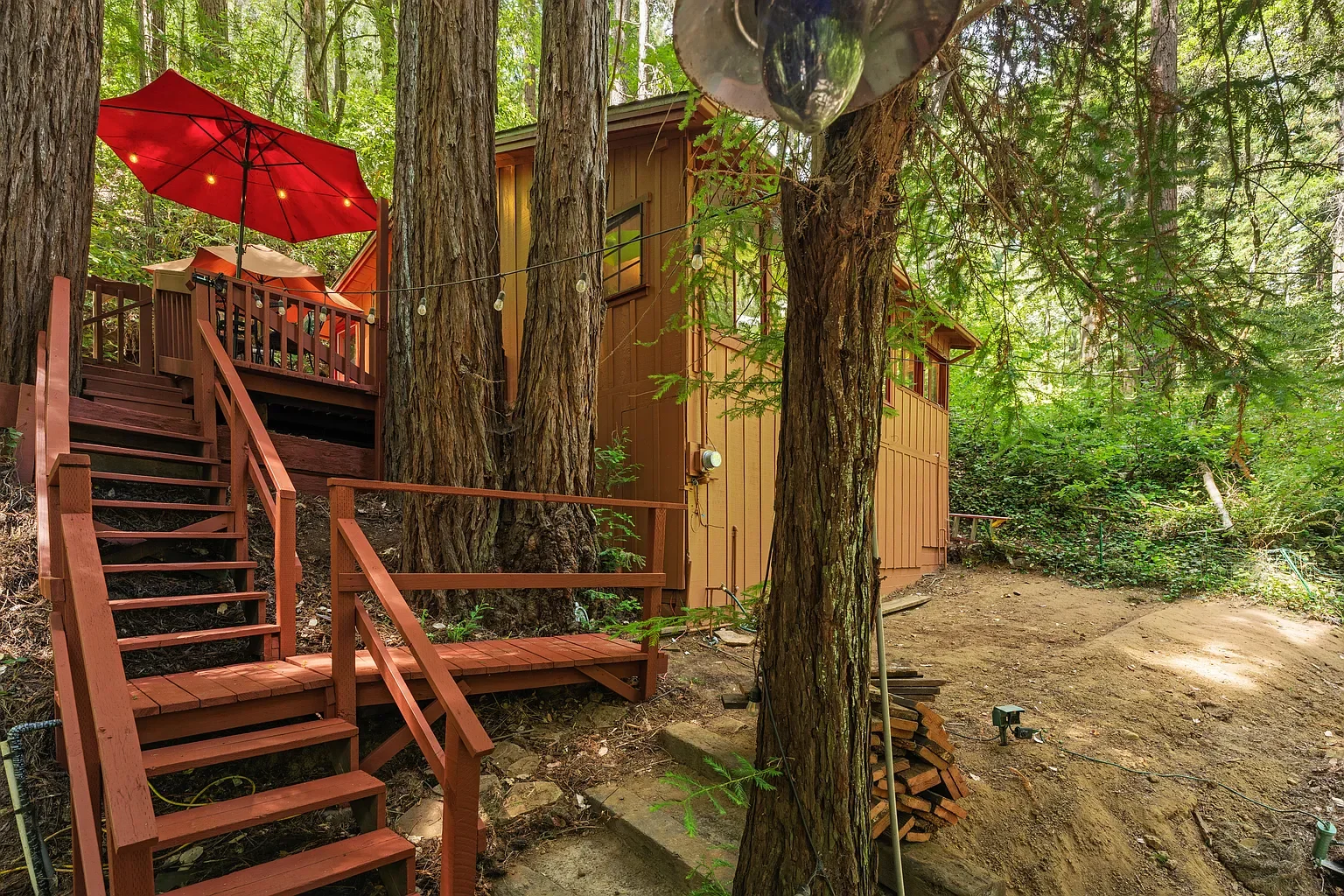
Last Friday, a red flag warning went up across the Santa Cruz Mountains. Lightning, gusty winds, and two fires already burning nearby (the Timber Fire and the Plaskett Fire down in Big Sur) had crews standing by. Anyone who's lived here a while felt the same flicker of déjà vu I did. Dry lightning is exactly what sparked the CZU Lightning Complex Fire back in August 2020, the one that took out nearly 1,500 structures across these mountains.
That's the backdrop for this post. We're at the tail end of fire season and the front edge of storm season, and if you own a home up here, or you're about to, your insurance policy deserves more than a quick skim before you sign. Most homeowners don't think about their coverage until something happens. By then, it's too late to fix a gap. Here's what to actually look at right now, and why it matters more this time of year than any other.
Why This Matters More Right Now
Insurers reassess risk heavily after a rough season, so renewals that land in fall and winter often reflect what happened over the summer. That's been true for years in California, and it's part of why so many homes up here have ended up on the California FAIR Plan, the state's insurer of last resort for properties that traditional carriers won't touch. As of December 2025, the FAIR Plan had 668,609 policies in force statewide, a 146% jump since September 2022.
Here's the honest, straight-to-the-point read on where things stand this year: it's actually shifting in a good direction, for once. Under Commissioner Lara's Sustainable Insurance Strategy, insurers who want to keep using modern catastrophe modeling to set their rates now have to cover at least 85% of properties in the state's 662 wildfire-distressed zip codes. Farmers, California's second-largest home insurer, committed in May to marketing to at least 300,000 policyholders in those distressed areas and dropped its monthly cap on new business. Several other major carriers have made similar commitments. It's not instant relief, and it doesn't mean every mountain home suddenly has five carriers competing for it. But for clients who assumed FAIR Plan was their only option, it's genuinely worth a second look this year.
The FAIR Plan itself has also started rewarding the work people already do up here. Policies effective November 15, 2025 or later can qualify for a wildfire hardening discount of up to 16.4% off the wildfire portion of the premium, for things like clearing vegetation within five feet of the house, using noncombustible fencing, and keeping outbuildings 30 feet clear. If you've already done that defensible space work because it's just how you live up here, ask your agent whether you're getting credit for it.
California also has a real, legally required backstop worth knowing about. After the Governor declares a state of emergency for a wildfire, insurers are barred from non-renewing policies inside or adjoining the fire perimeter for a full year, whether or not you had a loss. It's not a hypothetical rule. The Department of Insurance enforced it for more than 64,000 policyholders across five counties after this year's Gann Fire. It's the kind of protection that exists because people like us live somewhere the risk is real, and it's worth remembering it's there.
What's Actually in Your Policy (And What's Not)
A standard homeowners policy is built from a few core pieces, according to the National Association of Insurance Commissioners:
Dwelling coverage pays to rebuild the structure itself, including the plumbing, heating, and electrical systems. This needs to reflect what it would actually cost to rebuild your home today, not what you paid for it or what it's worth on the market. Those are three different numbers, and mountain construction costs (access, materials, permitting) tend to run higher than people expect.
Personal property coverage protects your belongings. Worth checking whether yours pays replacement cost or actual cash value, because those are genuinely different payouts. Replacement cost pays what it takes to buy the item new. Actual cash value factors in depreciation, so a ten-year-old couch might pay out at a fraction of what a new one costs, as the NAIC explains it.
Liability coverage protects you if someone's hurt on your property, or you're responsible for damage to someone else's.
What's commonly left out, and this is the part that catches people off guard:
Flood. Standard homeowners policies exclude it, even if you're nowhere near a mapped flood zone. Separate flood coverage runs through the National Flood Insurance Program in most of the country, but that program's authorization is set to expire on September 30, 2026, a few weeks from now. Congress is expected to attach an extension to its fall funding package, but nothing's guaranteed. If flood coverage is on your radar heading into the rainy season, this is worth watching or asking your agent about directly.
Earthquake. Also excluded from a standard policy, statewide. Coverage runs through the California Earthquake Authority, a separate policy your carrier can help you add.
Landslide and mudflow. These get confusing even in flood policies, which is exactly why it's worth understanding for anyone near the CZU burn footprint. FEMA draws a real distinction: a mudflow, water actively carrying liquefied earth downhill, can be covered under flood insurance. A landslide, earth and rock moving as a slope failure, generally isn't covered by flood insurance or a standard homeowners policy at all. If your property sits below or near a steep, burned, or recently disturbed slope, that distinction is worth a real conversation with your agent, not a guess.
Sewer or drain backup. Usually needs its own rider, and it's a cheap one relative to the mess it prevents.
Questions Every Homeowner Up Here Should Ask Their Agent
→ Does my dwelling coverage reflect what it would actually cost to rebuild my home today, not what I paid for it?
→ Am I still on the FAIR Plan, or would I qualify for coverage through one of the carriers now writing new policies in distressed zip codes?
→ Am I getting credit for the defensible space and hardening work I've already done?
→ What's my deductible specifically for a wildfire claim, and is it a flat dollar amount or a percentage of my dwelling coverage? Those can be very different numbers.
→ If I'm near a slope that burned or has moved before, what actually covers earth movement, and what doesn't?
→ Has my premium changed this year, and if so, can you walk me through why?
For Buyers: Don't Wait Until Closing to Think About This
If you're house hunting in Felton, Ben Lomond, Boulder Creek, Lompico, or anywhere up Highway 9, get an insurance quote before you're under contract, not after. In some of these towns, especially the ones closer to the burn scar or further up the mountain, coverage can be harder to find or expensive enough to genuinely change your monthly payment math. I'd rather have that conversation with you during the search than after you've already fallen for a house.
This is the kind of thing I talk through with every buyer looking up here, because it's not the right coverage question for a flatland home in Santa Cruz. It's specific to what you're actually buying into. Ask about FAIR Plan status on the home, ask what the current owner pays and why, and get your own quote before you write an offer. It's a lot easier to build insurance into your decision than to discover it after you're already emotionally attached.
The Bottom Line
You don't need to become an insurance expert. You need to read your declarations page once a year, ask a few pointed questions, and not assume the coverage you had three years ago still fits the home, or the market, you're in today. Up here especially, that five minutes of homework is worth it before the rain starts.
Looking for Insurance Recommendations?
I keep a short list of insurance agents who actually understand mountain properties, FAIR Plan transitions, and what it takes to get a fair quote up here. Happy to pass it along.
→ Reach out through my contact page and I'll send you my trusted vendor list.
→ Sign up for my Santa Cruz Mountains newsletter for more of this kind of practical, unglamorous, actually-useful stuff.