

Living in Boulder Creek, Working Over the Hill: What the Commute Really Looks Like
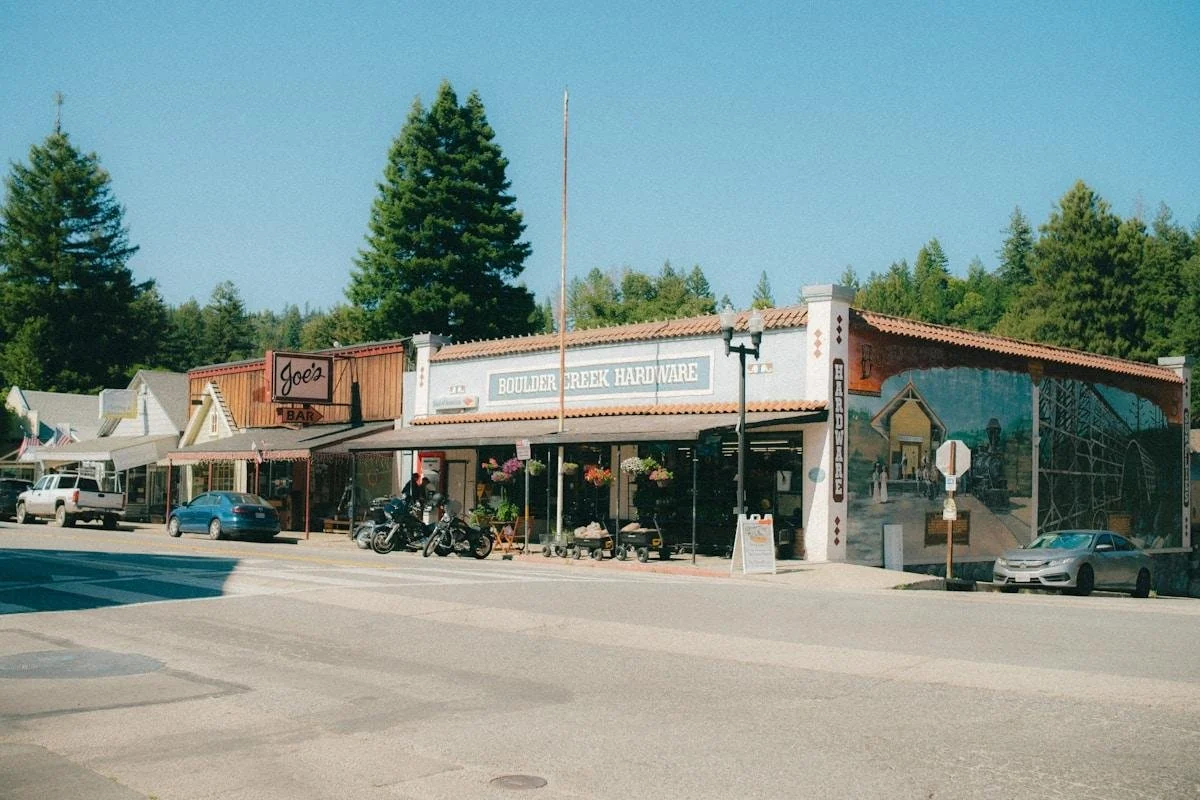
Every family that considers Boulder Creek asks some version of the same question: what's the commute actually like? The honest answer is that it depends entirely on how often you're doing it, and 2026 has made that answer more forgiving than it used to be, thanks to how much work has genuinely gone hybrid.
The road itself
Getting out of Boulder Creek means Highway 9 first, then usually a connection to Highway 17 through Scotts Valley if you're headed toward San Jose or the South Bay. Neither road is fast, and neither is entirely predictable. State Route 17 has seen recurring lane closures, paving, and tree work through 2026, plus one-way traffic at points like Granite Creek Road in Scotts Valley due to bridge work. San Lorenzo Valley itself has its own 2026 Pavement Management Project underway, which means partial and full road closures pop up in different spots throughout the year.
None of that is unique to this year — mountain roads get maintenance, and maintenance means delays. The honest framing for buyers is that your commute time on any given day is a range, not a fixed number, and building in flexibility matters more here than it would for a flat, straight freeway commute.
The transit option most people don't know about
Santa Cruz METRO runs the Highway 17 Express, a commuter bus service connecting Scotts Valley to downtown San Jose, with connections to Diridon Station and Caltrain. It's not a door-to-door solution if you're coming from deep in Boulder Creek, but combined with a short drive down to the Scotts Valley park-and-ride, it's a real option for people who want to read, work, or just not drive Highway 17 five days a week.
How hybrid work changed the calculation
Five years ago, buying in Boulder Creek meant accepting a genuinely rough daily commute if your job required you in an office. That calculation has shifted. Families moving here now are much more often doing two or three days a week over the hill instead of five, which changes what an 'acceptable' commute even means. A 45-to-60-minute drive feels very different when you're doing it twice a week instead of ten times.
That said, it's worth being honest with yourself before you buy: if your job requires daily in-person attendance with no flexibility, Boulder Creek is going to test that in a way it wouldn't have tested a shorter commute. This isn't a reason to rule it out — it's a reason to actually map your real schedule against the drive before you're the one white-knuckling Highway 17 in the rain at 7am.
Questions worth asking yourself before you buy here
How many days a week will I actually need to be over the hill in a typical month?
Does my employer's hybrid policy have any indication of becoming stricter?
Am I comfortable with a commute time that has real day-to-day variability, not a fixed number?
Have I actually driven this route at the time of day I'd be commuting, not just looked it up on a map?
The tradeoff of Boulder Creek living is real — the commute costs you something, and it's honest to name that upfront rather than pretend it doesn't. What you get in exchange is space, quiet, and a kind of daily life that a lot of families find is worth the drive. If you want to talk through what your specific commute would actually look like from a specific street, I'm glad to help you figure that out before you buy, not after.