

Well, Mutual, or Municipal: Understanding Water in Ben Lomond
One of the first questions I ask every buyer touring a Ben Lomond property is "do you know how the water gets to this house?" It's not a trick question, but it does surprise people, because in most of the country the answer is just "the city." In Ben Lomond and the towns around it, the answer might be a well you maintain yourself, a mutual water company you pay dues to, or a public utility pulling from a reservoir a few miles away — and the difference matters more than almost anything else in the transaction.
Where the Water Actually Comes From
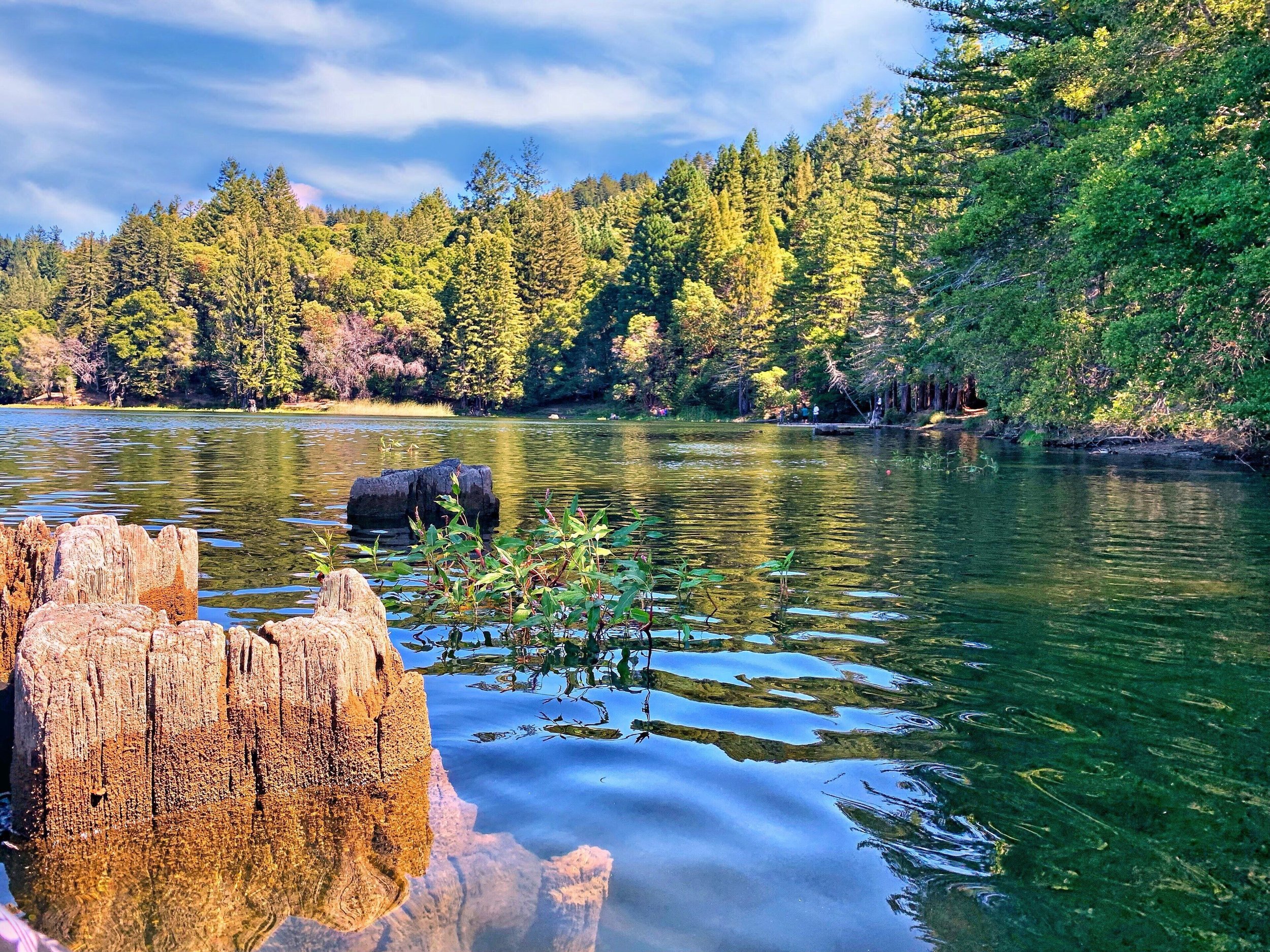
Santa Cruz as a whole leans heavily on surface water — about 95% of the city's supply comes from surface sources, with the rest from groundwater, according to the City of Santa Cruz Water Department. Some of that surface water comes from Loch Lomond, the reservoir tucked in the mountain community of Lompico — the city draws just over 20% of its water from there, which is a fact I love telling people because Lompico itself doesn't drink from its own reservoir.
Scotts Valley runs differently. Its water district pulls entirely from groundwater, with wells tapping the Lompico and Butano aquifer formations — roughly 60% Lompico, 40% Butano — as part of the Santa Margarita Groundwater Basin. Ben Lomond itself is served by a patchwork: some homes are on the San Lorenzo Valley Water District, some are on small mutual water companies serving just their neighborhood, and some — including mine, a bit further up the valley — pull directly from surface water that you filter and treat yourself.
Mutual Water Companies: The Thing Nobody Explains
Forest Lakes has its own water company, and it's not the only neighborhood-scale system serving this stretch of the valley. A mutual water company means the residents served by it collectively own and maintain the infrastructure — the well, the pump, the pipes — rather than a public utility doing it for them. That comes with real upsides: local control, and often lower rates. It also means if the pump fails, it's a shared problem the community solves together, not a call center in another county.
If you're buying into a mutual water company's service area around Ben Lomond, ask for their annual report, their rate history, and whether there's a capital reserve for infrastructure repairs. A well-run mutual company is a genuine asset. A poorly-run one means special assessments showing up in your mailbox with no warning.
Private Wells: What Ownership Really Means
Owning your own well sounds appealingly simple until you realize you're now your own water utility. You're responsible for testing water quality, maintaining the pump, and troubleshooting when flow drops in a dry summer. Some parts of the valley around Ben Lomond rely on surface water diverted from a creek or spring, which requires its own filtration and treatment system, since it isn't groundwater and carries different risks.
Questions worth asking before you buy a well-served property:
What's the well's flow rate, and has it ever dropped significantly in a dry year?
When was the pump last serviced, and what's its expected remaining life?
Is this groundwater or surface water, and what treatment system is currently in place?
Is there a backup source if the primary system fails during fire season?
Why This Changes How You Should Shop in Ben Lomond
None of these systems are a reason to avoid a house. Plenty of families in Ben Lomond, mine included, live happily on water they treat themselves. But it does mean the water source should be one of the first three questions you ask about any property here, right alongside the septic and the insurance, because it shapes your monthly costs and your maintenance calendar in ways a city-water buyer never has to think about.
If you're touring homes in Ben Lomond and want help understanding a specific property's water setup before you get attached to it, I'm glad to walk through it with you — it's one of those local-knowledge things that's hard to Google your way through.